

FULL RECIPE LISTING

We put all of our recipes here in one place to make it easy for you. Heck, we even categorized them (click on a category to go directly to its section). You're welcome.


Accompaniments | Appetizers & Hors d'Oeuvres | Beverages | Breads | Cocktails | Desserts | Main Courses | Salads | Side Dishes | Soups


ACCOMPANIMENTS

COMPOUND BUTTERS
Garlic Spiced Butter
Harvest Spiced Butter
Madeira Butter
Sage Butter

DRESSINGS
Basil & Chervil Vinaigrette
Coffee Vinaigrette
Creamy Garlic Vinaigrette
Creamy Lemongrass Dressing
Ginger Lime Vinaigrette
Lemongrass Vinaigrette
Tobiko Roe Vinaigrette
Vanilla Bean Vinaigrette
Warm Basil Vinaigrette

GLAZES & SYRUPS
Apple Cinnamon Glaze
Asian Honey Glaze
Blueberry Lavender Syrup
Cardamom Wine Syrup
Spiced Ginger Syrup

JAMS & SPREADS
Caramelized Fig Spread
Chocolate Cranberry Jam
Kalamata Mascarpone Spread
Orange and Lavender Conserve
Roasted Garlic and Red Pepper Hummus
Spiced Cranberry & Orange Relish
Zucchini Relish

MARINADES AND RUBS
Lavender & Honey Marinade
Spiced Coffee Rub for Meat

MAYONNAISE
Aïoli Garni (Garlic Mayonnaise)
Lemon Herb Mayonnaise

SAUCES
Berry Coulis
Cherry Port Sauce
Ginger Lime Chimichurri
Hazelnut Mascarpone Creme
Horseradish Creme Fraîche
Nutmeg Creme Fraîche
Spicy Peach & Ginger Grilling Sauce
Spicy Satay Dip
Sweet Chile Dipping Sauce
Tarragon Butter Sauce
Tarragon Cream
Vanilla Citrus Crème

MISC
Champagne Onions
Moroccan Preserved Lemons
Pan de Higo (Fig Cake)
Pepitas (Spicy Pumpkin Seeds)
Perada (Pear Cheese)
Savory Garlic Ice Cream

***back to top***


APPETIZERS & HORS D'OEUVRES

BREADS & PASTRIES
Mini Savory Bites
Minted Pea Purée Canapes in Puff Pastry Vol-au-Vents
Thyme Focaccia with Kalamata Mascarpone Spread

FISH & SHELLFISH
Avocado and Crab Timbales with Tobiko Roe Vinaigrette
Avocado Crème Shrimp
Bon Temps Crab Cakes with Rémoulade
Cucumber Cups with Caviar and Champagne Onions
Dilled Crab Salad on Artichoke Bottoms
Diver Scallops with Cauliflower Cream from Chef Rick Tramonto
Eggs with Caviar and Salmon Rosettes
Grilled Lemongrass Shrimp with Sweet Chili Dipping Sauce
Grilled Teriyaki Salmon Bites
Hoi Polloi Salmon from Chef Bun Lai
Lobster Arepas
Lobster Bisque Shooters
Lobster, Mango and Jicama Summer Rolls with Nuoc Cham Nem Dipping Sauce
Lobster Ravioli with Vanilla Butter Sauce
Morilles à la Crème (Morels in Cream Sauce)
Multi-Layered Caviar Torte
Porcini Dusted Scallops in an Enriched Mushroom Broth
Shrimp & Avocado Canapés
Shrimp Ceviche
Smoked Salmon and Caviar "Pizza"
Smoked Trout with Horseradish Creme Fraîche

FRUITS & VEGETABLES
Apple Anise Pizza
Apple & Blue Cheese Tartine
Asparagus Carpaccio
Fava Bean Bruschetta
Herbed Mascarpone & Beet Napoleons with Walnut Oil
O-Hitashi (Mini Spinach Towers)
Pan de Higo (Fig Cake)
Peppers Stuffed with Halloumi & Pine Nuts
Perada (Pear Cheese)
Roasted Garlic and Red Pepper Hummus
Spicy Artichoke Spinach Dip
Steamed Artichokes with Lemon Herb Mayonnaise
Tomato & Nectarine Timbale

MEATS
Celeriac Prosciutto Rolls with Lemongrass Vinaigrette
Foie Gras Mousse with Fig Syrup on Crisp Toast Points
Foie Gras Terrine with Mulled Plums and Gingered Pears

***back to top***


BEVERAGES

(Note: Cocktails in next section below)

Café Brûlot
Cardamom Hot Chocolate
Cardamom Tea
Chestnut Hot Chocolate
Honeyed Chai Tea
Thai Iced Coffee

***back to top***


BREADS

Apple Anise Pizza
Caramelized Apple Bread Pudding
Dried Fig & Hazelnut Bread
Lavash Crackers
Lavender Biscotti with Almonds
Lavender, Walnut & Honey Slipper Breads (Ciabatta)
Mini Savory Bites
Nutmeg Cheddar Breadsticks
Rosca Rey de Reyes Tropical al Café (Three Kings Tropical Bread)
Rosemary Corn Financiers
Savory Bread Pudding
Savory Cheese Popovers
Seeded Rye Bread
Thyme Focaccia with Kalamata Mascarpone Spread
Upside-Down Cranberry Cornbread
Zucchini & Sweet Potato Bread

***back to top***


COCKTAILS

Blood Brothers
Bombay Grapefruit Lemonade
Clove Spiced Champagne
Embrace: A Valentine Cocktail
Epiphany
Ever After
Fields of Gold
Fizzy Ginger
Gaia: Inspired by Mother Earth
Garden Temptations
Lemongrass Champagne Mojito
Lemongrass Lemonade
Lemongrass Martini
Love & Honor
Love Potion: Family Edition
Lychee Martini
Magic Carousel
Margaritas Two Ways
Pomegranate Champagne Cocktail
Provocachic Cosmopolitan
Secret Garden
Spanish-Style Egg Nog
Summer in the Woods
Surreal Theobroma
Vanilla Sea
Vanilla Vixen
Virgin Colada

***back to top***


DESSERTS

Almond Tarragon Cake
Amaretto Tiramisù
Anise Panna Cotta with Spiced Rhubarb
Apple Anise Pizza
Apple Cinnamon Empanadas
Apricot Ginger Flan
Avocado Coconut Pudding
Basil & Orange Ice Cream with Cinnamon Tuiles
Berries with Citrus and Vanilla
Berry Coulis
Blood Orange Granita
Blueberry Cheesecake Ice Cream
Blueberry Lavender Syrup
Buttermilk Cake
Caramelized Apple Bread Pudding
Caramelized Napoleon with Sage and Cranberry
Caramelized Pineapple Timbales with Lemongrass Crème & Cool Mint Syrup
Chestnut Caramel Pound Cake
Cardamom Scented Rice Pudding
Chai Pots de Crème
Champagne Apricot Sorbet
Champagne Cookies
Champagne Marshmallows
Champagne Sabayon with Roasted Strawberries and Honey Pecan Twists
Cherry Port Sauce
Chilly Drunken Orange "Creamsicle"
Chocolate and Caramel Tart with Port Ganache
Chocolate Cranberry Jam
Coffee Granita
Coffee Zabaglione
Fig Tart with Vanilla Crème Patissière
Flan de Champagne (Champagne Flan)
Garlic Brittle Cookies
Ginger & Honey Crème Brûlée
Gingered Peach Trifle
Gingered Peach Tarte Tatin
Green Tea & Orange Mousse Cake
Grilled Peaches with Coconut Milk and Cinnamon Sugar
Hazelnut and Fig Linzer Cookies
Honey Lavender Caramels
Honey Biscotti
Honey Soufflé with Earl Gray Anglaise
Honeyed Carrot Cake
Lavender Biscotti with Almonds
Lavender Meringues
Lavender Pound Cake with Lemon Glaze
Lemon Upside-Down Cake
Lemongrass Cilantro Sorbet
Luscious Thai Curry Truffles
Mardi Gras King Cake
Mascarpone Brownies with Honey Chocolate Sauce
Mascarpone Cheesecake with Honeyed Pistachios
Melon Ball Salad in Spiced Ginger Syrup
Milk and Honey Lavender Sorbet
Mocha Pudding with Espresso Creme
Molded Vanilla Cream with Berry Compote
Oatmeal Raisin Spice Cookies
Olive Oil Brownies with Toasted Walnuts
Orange and Lavender Conserve
Pear & Lavender Crème Brûlée
Pear Panna Cotta with Port Wine Gelée
Pear Soufflé
Pecan Shortbread
Persian Honey Almond Brittle
Poached Pears in Cardamom Wine Syrup
Poached Pears with Chocolate Raspberry Sauce
Pumpkin Flan with Ancho Chile Brittle
Pumpkin Streusel Cake
Raspberry Soufflé
Rosca Rey de Reyes Tropical al Café (Three Kings Tropical Bread with Coffee)
Rosemary & Honey Roasted Pears
Sparkling Melon Soup with Orange Flower Crème
Tropical Fruit Salad with Tarragon Cream
Vanilla Citrus Crème
White Chocolate Cinnamon Crusted Tuiles
White Chocolate Lemon Napoleon

***back to top***


MAIN COURSES

BRUNCH
Apple Anise Pizza
Banana Pancakes with Hazelnut Mascarpone Creme
Fluffy Mascarpone Omelets with Asparagus & Champagne Onions
Vanilla Pancakes with Roasted Vanilla Plums

BEEF
Filetto Tartufato (Filet Mignon with Foie Gras and Truffles)
Gorgonzola-Stuffed Steak with Prosciutto
Gramma Crucitti's Meatballs
Madeira Beef Filet
Steak with Champagne Braised Cippolini Onions and Sage Butter
Thai Red Curry Beef with Pumpkin

CHICKEN & TURKEY
Classic Mexican Mole (with Grilled Chicken and Cashews)
Grilled Chicken Ciabatta Sandwiches with Roasted Pepper Duo
Lavender & Honey Roasted Chicken
Mardi Gras Chicken and Andouille Gumbo
Moroccan Lemon Chicken with Chickpeas and Honeyed Sauce
Southwestern Stuffed Turkey Breast
Turkey and Wild Mushroom Sauce
Turkey Gumbo
Turkey Preparations: Brining and High-Heat Roasting

FISH & SHELLFISH
Asparagus Risotto with Truffled Lobster
Citrus Tea Rubbed Halibut from Chef Ming Tsai
Lobster Arepas
Lobster Ravioli with Vanilla Butter Sauce
Lobster Rolls with Dill
Mediterranean-Style Shrimp with Orzo
Mixed Seafood in Ginger Broth with Confetti Vegetables
Moroccan Spiced Smoked Salmon
Olive Oil Poached Sablefish with Citrus & Thyme
Pistachio Crusted Salmon with Bailey's Irish Cream Sauce
Porcini Dusted Scallops in an Enriched Mushroom Broth
Roasted Prawns with Morels and Red Curry Butter
Rosemary Lobster Fricassé with Baby Vegetables
Salmon Fettucine with Creamy Lemon Vinaigrette
Salmon with Lemon-Thyme Persillade and Parsley Mayonnaise
Sea Bass en Papillote with Sweet Chile Hoisin Broth
Seared Scallops with Vanilla Champagne Crème and Haricot Verts
Smoked Salmon and Caviar "Pizza"
Trout Filets with Hot Buttered Champagne Sauce

GAME
Aromatic Spiced Coffee Rub for Meat
Boneless Quail Stuffed with Poultry Quenelle
Magret de Canard au Poivre (Smoked Duck Breast)
Poussins en demi-deuil (Hens in Mourning)
Roast Venison: Classic Scottish Recipe
Roasted Squab (or Game Hens) with Apple Cinnamon Glaze
Seared Duck Breast with a Figged Port Demi-Glace
Sautéed Duck Breast with Green Peppercorn and Morel Cream Sauce

PORK
Moroccan Spiced Pork Tenderloin with Cardamom Glazed Carrots
Pork Tenderloin with Asian Honey Glaze
Sage Stuffed Pork Chops with Cranberry Glaze
Sicilian Sausage and Peppers
Tipsy Pork Chops with Bourbon-Laced Peach Chutney

LAMB
Coffee Spiced Lamb with a Minted Coffee Sauce
Herb Crusted Rack of Lamb with Garlic Smashed Potatoes and Balsamic Reduction
Lamb and Fresh Herb Khoresh
Lamb and Orange Stew
Lamb Loin with Baby Spinach, Sun-Dried Tomatoes and Bush Tomato Chutney
Roman Roast Leg of Lamb with Orzo

VEAL
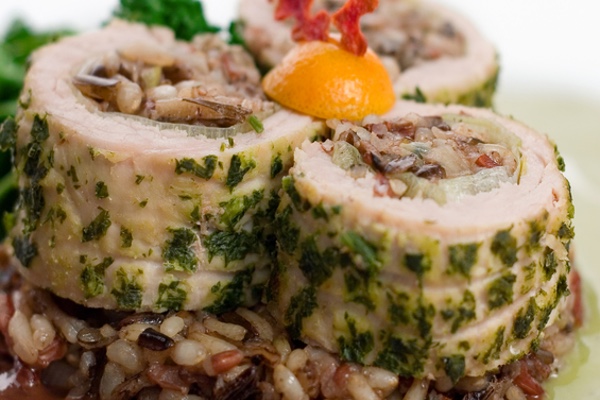
Herb Crusted Veal Roulade with Creamy Leek Sauce and Savory Chocolate Gravy
Veal Saltimbocca
Veal Scallopini with Grapes and Port Wine Reduction

STARCHES
Basil Pasta Rags with Four Cheese Filling and Basil Sauce Mignonette
Farfalle and Asparagus with a Lemongrass Cream Sauce
Farfalle with Spring Peas & Morels in a Pernod Cream Sauce
Harvest Risotto with Caramelized Pears
Pasta with Brussels Sprouts, Prosciutto and Pecans
Spaghetti ai Tartufi Neri (Spaghetti with Black Truffles)
Spaghetti Pie

***back to top***


SALADS

Aromatic Rice and Pearl Barley Salad
Dilled Crab Salad on Artichoke Bottoms
Fennel, Orange and Zereshk Salad with Fig Vincotto
Festive Fennel Salad
Grilled Romaine Lettuce with Creamy Lemongrass Dressing
Lemon-Zested Granny Smith Apple & Fennel Salad
Melon Ball Salad in Spiced Ginger Syrup
Pear and Prosciutto Salad with Toasted Walnuts
Red and White Salad with Candied Pecans, Figs and Chevre
Summer Tomato Salad with Creamy Garlic Vinaigrette
Tropical Fruit Salad with Tarragon Cream

SALAD DRESSINGS:
Basil & Chervil Vinaigrette
Coffee Vinaigrette
Creamy Garlic Vinaigrette
Creamy Lemongrass Dressing
Ginger Lime Vinaigrette
Tobiko Roe Vinaigrette
Vanilla Bean Vinaigrette
Warm Basil Vinaigrette

***back to top***


SIDE DISHES

STARCHES
Aromatic Rice and Pearl Barley Salad
Basil Pasta Rags with Four-Cheese Filling & Basil Sauce "Mignonette"
Caramelized Apple Bread Pudding
Chipotle Mashed Sweet Potatoes
Cranberry Couscous
Garlic Smashed Potatoes with Balsamic Reduction
Harvest Risotto with Caramelized Pears
New Orleans Red Beans and Rice
Polenta Napoleons with Wild Mushroom Bruschetta & Truffles
Savory Bread Pudding
Sweet Potato & Gorgonzola Gratin
Upside-Down Cranberry Cornbread

VEGETABLES
Asparagus Carpaccio
Balsamic-Roasted Root Vegetables
Calabacitas with Winter or Summer Squash
Cardamom Glazed Carrots
Champagne Glazed Cauliflower
Classic Truffle Preparations & Absolute Indulgences
Herbed Mascarpone and Beet Napoleons with Walnut Oil
O-Hitashi: Mini Spinach Towers
Oven Roasted Winter Vegetables
Pear Fritters with Sweet Potato & Sekel Pear Sauce
Peppers Stuffed with Roasted Vegetables, Halloumi and Pine Nuts
Roasted Asparagus with Tarragon Butter Sauce
Roasted Fennel with Lavender and Honey Marinade
Roasted Pumpkin & Vegetable Medley with Creamy Polenta
Serafino's Sofrito
Spice Glazed Carrots
Steamed Artichokes with Lemon Herb Mayonnaise
Tomato & Nectarine Timbale

***back to top***


SOUPS

Apple & Turnip Soup with Nutmeg Cheddar Breadsticks
Artichoke Bisque
Asparagus and Spinach Soup with Yuzu Custard
Butternut Squash Bisque with Nutmeg Creme Fraîche
Carrot and Ginger Soup
Chilled Cucumber Mint Soup
Chipotle Corn Chowder
Lobster Bisque Shooters
Lobster Stock
Mixed Seafood in Ginger Broth with Confetti Vegetables
Pumpkin Bisque
Salmorejo
Silky Spring Beet Soup
Silky Blue Cheese Soup
Spinach Tortellini Soup
Spring Pea Soup


Below you'll find our most recent recipes in chronological order.


Tomato & Nectarine Timbale

Posted on 23 August 2010 by The Gilded Fork

Summer fruits offer a variety of levels of sweetness from ripening sugars.  In this dish, we capture two distinct but complementary flavors and textures and wrap them together in a spicy, sweet fruit syrup.

Serves 6 as a side dish or appetizer

Ingredients

For the nectarine syrup:
2 ½ cups very ripe nectarines (or white peaches), pitted and chopped
1 dried red chili pepper (or ¼ teaspoon crushed red pepper)
1 tablespoon honey
1 tablespoon freshly squeezed lemon juice
Sea salt and freshly ground pepper (preferably pink peppercorns)

For the timbale:
4 medium-firm, ripe heirloom tomatoes, seeded and diced to about ¼” (about 1 ½ cups)
2 cups nectarines, pitted and diced to about ¼”
1 tablespoon chervil leaves, plus additional leaves for garnish
1 tablespoon fresh lemon thyme, chopped, plus additional leaves for garnish
¼ cup dessicated coconut, or unsweetened
1 teaspoon high quality extra virgin olive oil, divided, plus additional for garnish
Sea salt crystals

Preparation

Place the nectarines (or peaches, if using) in a blender and puree until smooth.  Pour the puree through a mesh sieve placed over a medium saucepan, pressing on the solids to extract as much nectarine liquid as possible.  Add the dried red chili pepper or crushed red pepper.  Bring the mixture to a simmer over medium heat and reduce by about one half.  Remove the chili pepper and strain the liquid through a mesh sieve into a clean glass bowl.  Add the honey and lemon juice and mix to combine.  Chill in the refrigerator for at least 2 hours.  Taste.  Adjust the seasonings by adding salt or pepper.

In a large mixing bowl, combine the diced tomatoes and nectarines, the chervil, thyme, and coconut.  Add just enough of the nectarine syrup to flavor the tomato and nectarine mixture, and gently combine.  The mixture should be thick and hold together.  If necessary, add the olive oil to moisten the mixture and gently toss.

Place a 2” (or larger) diameter round mold on a chilled plate.  Fill the mold with the nectarine tomato mixture.  Carefully remove the mold.  Plate each serving before garnishing.

Service

Once each serving is plated, garnish with additional chervil leaves, thyme, and a drizzle of olive oil.  Crush sea salt crystals between your fingers and lightly sprinkle each timbale with a small bit of the crushed crystals.

Recipe by Donna Marie Desfor
Photo by Kelly Cline

Tags: , , ,

Comments (1)

Gingered Peach Tarte Tatin

Posted on 19 August 2010 by The Gilded Fork

The Tarte Tatin, named after the Tatin sisters, who served the dish in their tavern in the Loire Valley, is a classic French dessert using apples. This reinterpretation uses peaches, which are in season during the summer, paired with preserved ginger. This easy yet satisfying dessert always pleases, and can be made without much fuss. The key is caramelizing the sugar to just the right point.

6 servings

Ingredients

6 ripe peaches
½ cup castor sugar
4 tablespoons sweet cream butter, unsalted
3 tablespoons preserved ginger, chopped

For the pâte brisée (pie crust):
1¼ cups all purpose flour, plus extra for dusting
½ teaspoon salt
1 teaspoon sugar
8 tablespoons chilled unsalted butter (one stick cut into small pieces)
2-4 tablespoons ice water, plus extra if needed
1 egg, slightly beaten

Equipment

10-inch heavy-bottomed skillet (oven safe)
Rolling pin

Preparation

Prepare the pie crust:
Mix the flour, sugar and salt in the bowl of a food processor and pulse to mix well. Add the chilled butter pieces and pulse in short bursts to cut the flour and the butter together. The mixture should resemble crumbs. Do not overmix. Slowly drizzle in ice water a little at a time, and process just until the mixture comes together into a ball. If it’s a little dry, add just a splash more of the ice water, being careful not to add too much. The mixture should just hold its shape. Wrap the dough in plastic and refrigerate for 30 minutes, or freeze for 10.

Prepare the peach filling:
Preheat the oven to 375° F.

Boil a pot of water on the stovetop, and score a small “x” on the bottom of each peach and boil for about 10 seconds, then refresh in cold water. The peels should come off rather easily. Cut each peach in half and remove the stones.

Sprinkle the sugar in the bottom of a 10-inch ovenproof skillet and heat over medium heat until it begins to caramelize. Shake the pan back and forth a little if necessary, but do not stir. When the sugar turns a dark caramel color, remove it from the heat and dot with 2 tablespoons of the butter and half the chopped preserved ginger.

[Chef’s Note: Sugar will go from caramel to burnt in a split second, so it is important to watch it very carefully. Once it starts to brown, be ready to take it off the heat, and be careful not to burn yourself. Sugar burns are the most painful.]

Place the peaches cut-side up on top of the caramel. Be sure to pack them together as tightly as possible. Sprinkle with the remaining ginger and tuck a few pieces of the ginger in the gaps between the peaches. Cut the remaining butter into small pieces and dot over the peaches. Return the pan to the stove and cook over low heat while you roll out the pastry dough.

Sprinkle a clean countertop with a little flour and roll out the pâte brisée from the center outward, rotating occasionally, until the dough is about 11 inches in diameter (a little larger than your skillet) and ¼-inch thick. Use a little more flour, as necessary, if the dough becomes sticky.

Lay the pie crust over the peaches and tuck the edges into the sides of the pan. Brush lightly with the egg wash and bake for 20-25 minutes until the pastry dough is well browned and flaky.

Remove from the oven and allow to rest on the stovetop for about 5 minutes.

Service

Place a large serving plate over the skillet and invert onto the plate. The caramel will drip over the top of the peaches. Serve with ice cream or whipped heavy cream.

Variations

This recipe is infinitely variable. You can use plums, pears, and of course the classic apples. You may also use puff pastry or phyllo dough in this dish.

Recipe and photo by Mark Tafoya

Tags: , , ,

Comments (0)

Stone Fruit: Drupey Drawers of Goodness

Posted on 17 August 2010 by The Gilded Fork

What is more mortifying than to feel that you have missed the plum for want of courage to shake the tree?
- Logan Pearsall Smith

Etymology
Most stone fruits are members of the Prunus genus from the Latin prunus for plum. Stone describes the pit that is found in the center of the fruit.

Origin
Originating in China, stone fruits date back to 1000 BCE. We would like to thank the Silk Road not only for spreading wonderful Chinese spices and silks, but also for sharing stone fruits with Western neighbors in Persia. After making their way to Europe, stone fruits arrived in the Americas via Spanish settlers in Florida in the 16th Century. Several immigrant groups, predominantly Spanish and Russian, introduced California to stone fruits, and we imagine that their deliciousness encouraged expansion to sunny pockets of the United States and eventually into multitudes of mouth-watering dishes.

Description
Beyond coloring our landscapes with clusters of elegant blooms, stone fruit trees produce sweet and utterly juicy treats. What botanists call a drupe, stone fruits have a single hard pit in the center that provides both physical and nutritional support as the fruit grows on the tree. Freestone and clingstone are two types of drupes referring to the ease to which the center pit is freed from the flesh. What is and is not classified as a drupe can get scientific and confusing, so we’ll leave it at the following list of our favorite stone fruits.

Many of the following heavenly ingredients can be made into jams or jellies, or play a leading role in some of our favorite desserts, so we’d like to inspire you with the impetus for kitchen exploration. ‘Tis the season for stone fruit celebration, and our test kitchen is overflowing with all kinds of color.

Types

Peaches
With a “don’t hate me because I’m beautiful” attitude, peaches are the most popular of the stone fruit family. With a fuzzy exterior skin, fragrant and soft peaches have no need for sugar, heat, or dressing when ripened sufficiently on the tree. With delicate, round velvety cheeks, they are one of nature’s sweet gifts, and biting into a perfectly ripened one can make us delirious. But just because they don’t need to be manipulated does not mean we don’t like to. When cooking peaches, it is best not to overdo it as their texture can be easy to lose. When we want peaches halved and intact, we use the freestone variety so the pit is cleanly removed. You can see from our test kitchen dossier on peaches that we like to experiment. For example: Use peaches instead of apples in a classic Tarte Tatin and pair with ginger; or slice peaches, slather with coconut milk and cinnamon, and grill to caramelize that delicious sweetness. And the peach celebration would not be complete without a tasty Ever After cocktail with peach and rosemary essence!

Nectarines
A close relative to the peach, nectarines are the smoother-skinned of the two; for culinary purposes, nectarines can be substituted for peaches, as the flesh is quite similar. Their skin can vary widely in “blush” which refers to the dark red color that covers the skin, and indicates variety rather than ripeness. Choose those that give a little to the touch and have a fragrant, sweet scent. Nectarines can be incredibly juicy when ripe — and we are talking about the kind of juicy that runs down your arm when you take a bite. Given their super-sweet syrup, we would highly recommend the juice of nectarines for a sweet cocktail; or cut one up and serve in a fresh salad with feta cheese, prosciutto and balsamic vinaigrette.

Apricots
Say hello to the little jewels of the stone fruit family. With a skin like fine velvet, apricots vary in color from deep orange to yellow. If you are lucky enough to live near an apricot farm, 95% of which are in California, you will enjoy the euphoria of tree-ripened apricots instead of those that have ripened in transit. As close relatives, apricots and almonds pair well in poultry and pork dishes, and for added texture, choose the dried variety. Like all of our stone fruit friends, apricots make fantastic dessert combinations as in our Champagne Apricot Sorbet.

Cherries
With festivals dedicated to their glory, cherries are a nutritional and culinary super-fruit. Rich in symbolism, cherries and their blossoms signify feminine beauty, love and the cycle of life. Sweet Bing cherries can be enjoyed raw, and we don’t hesitate to indulge around their peak season. The American classic cherry pie is made with smaller, more sour cherries. Cheesecake or ice cream can be one step above heavenly with a generous pour of Cherry Port Sauce. Try dried cherries in duck, pork, or chicken dishes for a tart and sweet taste or serve with almonds in a side of jasmine rice. Of course, sometimes simple is best, as in cherries poached in red wine over vanilla bean ice cream. Do try it.

Plums
We drool over the sight of purple plums. Plums originated in Asia and have undergone much crossbreeding, which as resulted in the jeweled colors of yellow, orange, red and purple-colored beauties. Plums can sit in for pineapple in upside-down cakes or pureed (minus the skins) for a frozen plum sorbet. We’ve also been asking ourselves why we don’t use prunes more; although they might sound like a quest for a geriatric, high-fiber diet, they are sweet little treats, and as with many dried fruits, can be used to infuse balsamic vinegar during reduction. (Remove the prunes halfway through the reduction process.)  Like dried cherries, prunes are lovely with duck, pork or poultry. Plums are also a pleasant complement to pears, which we discovered in creating our Foie Gras Terrine with Mulled Plums and Gingered Pears. And we ask that you have a glass of Champagne with said foie gras to toast the stunning plum.

Almonds
Almond cultivation is quite an impressive process. Almond trees are not self-pollinating, so the almond farmer must round up a swarm of bees to do the grunt work. To further complicate almond things, at least two different varieties must be grown in the orchard for cross-breeding. Throughout the growing process, beautiful flowering trees give way to green pods and later dried hulls, and the pods are eventually shaken off their trees in late summer and early fall. It’s a process that we as fans of the almond think is worth all the trouble. With a fairly sweet taste on their own without being overpowering, almonds fit magnificently in desserts: puff pastry, cake, ice cream, chocolate, biscotti, cookies. Pair them with fruits, in salads, or with goat cheese. With a smooth, buttery texture, almonds pair well with chicken, lamb, and Indian cuisine. And of course we like to keep a stash of them around as snacks when we’re tempted to reach into the cookie jar.

Coconuts
Stirring things up in pina coladas and the world of botany, coconuts are part of an ongoing debate. Are coconuts a fruit, nut or drupe? Nuts are technically fruits, so maybe they’re both. Drupes have pits and sweet, juicy flesh, and coconuts don’t quite fit in. In order to make them fit, some botanists have categorized it as a dry drupe and called it a day. Regardless of where they fall categorically, we wanted to give a little love to the coconut. After all, when we are biting into chocolate-covered coconut paradise, do we really care if it’s a nut, fruit or dry drupe? The coconut shouldn’t worry about fitting in, as it fits in just fine with Thai curry, citrus fruits or ginger. Thai Red Curry Beef and Pumpkin puts creamy coconut milk to perfect use. Shredded coconut and our friend cilantro will liven up a fruit salad. And sometimes a little taste of coconut is as close as we get can to the beach in December.

Our Approach
We commend stone fruits for helping us create delicious desserts, however we like to branch out a little, too. Use dried stone fruits in savory dishes. Make a stone fruit cocktail. Go out on a limb — after all, isn’t that where the fruit is?

Recipes

Peaches
Tipsy Pork Chops with Bourbon-Laced Peach Chutney
Spicy Peach & Ginger Grilling Sauce
Grilled Peaches with Coconut Milk and Cinnamon Sugar
Gingered Peach Trifle
Gingered Peach Tarte Tatin
Ever After Cocktail

Nectarines
Tomato & Nectarine Timbale

Apricots
Champagne Apricot Sorbet

Cherries
Cherry Port Sauce

Plums
Vanilla Pancakes with Roasted Vanilla Plums
Foie Gras Terrine with Mulled Plums and Gingered Pears

Almonds
Lavender Biscotti with Almonds
Olive Oil Poached Sablefish with Citrus & Thyme
Pan de Higo (Fig Cake)
Persian Honey Almond Brittle
Classic Mexican Mole (with Grilled Chicken and Cashews)
Love & Honor Cocktail
Hazelnut and Fig Linzer Cookies
Almond Tarragon Cake

Coconuts
Avocado Coconut Pudding
Grilled Peaches with Coconut Milk and Cinnamon Sugar
Avocado Crème Shrimp
Cardamom Scented Rice Pudding
Thai Red Curry Beef with Pumpkin

Sources
California Tree Fruit Agreement
Sweet Georgia Peaches
University of Rhode Island Greenshare Factsheets
Is a coconut a nut or a fruit?
Almond Board of California
Choose Cherries

The Worldwide Gourmet

Dossier and photo by Kalle Guinn

Tags: , , , , , , , , ,

Comments (0)

Cherry Port Sauce

Posted on 17 August 2010 by The Gilded Fork

Sweet dark cherries simmered in ruby port wine with a hint of star anise and cinnamon is the ideal topping for a perfect ending dessert. Serve over ice cream, as a filling for éclairs, or a spread for cheesecake.

4 servings

Ingredients

1 cup ruby port
¾ cup sugar
1 lb fresh or frozen pitted cherries
1 cinnamon stick
¼ teaspoon ground star anise
5 teaspoons cornstarch
5 teaspoons water
1 teaspoon vanilla

Equipment

Small saucepan, cherry pitter (or paring knife), plastic gloves, plastic cutting board

Preparation

Prepare the cherries:
Pit the cherries using a cherry pitter or paring knife. To use a paring knife, cut around the circumference of the cherry, pull the halves apart and remove pit.

[Chef’s note: Cherry juice will stain. Use care when pitting the cherries by using plastic gloves, cutting boards and frequently wiping up juice spills on your counter.]

Make the sauce:
Combine the port wine and sugar in a small saucepan and bring to a boil. Add the cherries, cinnamon stick and star anise and simmer for 5–10 minutes until the mixture reduces and starts to become syrupy.

[Chef’s note: If using frozen cherries, you might need to simmer a bit longer to defrost the cherries and reduce the resulting water.]

Mix the cornstarch and water together to make a slurry, stirring until completely dissolved. Add the cornstarch slurry to the sauce and bring to boil. Reduce the heat, and continue to simmer until the mixture is thick and shiny. Remove from the heat and cool completely. Cover and chill until ready to serve.

Service

Serve over your favorite ice cream or creamy rice pudding. The sauce can also be spread over cheesecake.

Variations

For a great homemade Cherries Jubilee Ice Cream, bring a quart of good-quality vanilla bean ice cream to room temperature, mix the Cherry Port Sauce with the ice cream and place back into a freezer-safe container. Freeze 24 hours, then serve.

Recipe and photo by Lia Soscia

Tags: , ,

Comments (0)

Basil Pasta Rags with Four Cheese Filling & Basil Sauce “Mignonette”

Posted on 16 August 2010 by The Gilded Fork

This is the rustic approach to ravioli or lasagna, and one that saves time while delivering the same magnificent taste.  Despite the lack of precision in its creation, it always appears lovely and inviting at service.  The Basil Sauce “Mignonette” with a garnish of fresh diced garden tomatoes makes this a gorgeous plate to serve as an appetizer, pasta or main course.

Makes about 1 1/4 cups filling

Ingredients

Basil Pasta Dough, rolled and cut through the width to make small sheets of dough
½ cup Parmesan cheese, grated
¼ cup Buffalo Mozzarella cheese, coarsely grated
¼ cup Danish Fontina cheese, shredded
¼ cup whole milk Ricotta cheese
3 cloves garlic, minced
Sea Salt
2 tablespoons fresh herbs, chopped (choose basil, chives, parsley, oregano, marjoram, thyme, or any combination)
Olive oil
Basil Sauce “Mignonette” (recipe below)
Fresh tomatoes, finely chopped, for garnish

Preparation

Prepare a large pot of salted water and bring to a boil over high heat.  Lightly oil a large cookie sheet.  Preheat the oven to 375 degrees F.

In a medium mixing bowl, combine the four cheeses and garlic.  Add the fresh herbs and gently stir to incorporate throughout.

Place the pasta dough rags into the boiling water and cook for about 3 to 5 minutes, or until the pasta is almost cooked through.  Drain.  Separate the “rags.”

Place half the rags on the prepared cookie sheet about a 1/2-inch apart.  Place a small mound of the prepared cheese mixture in the middle of each rag (about 1/4 of the size of the pasta rag).  Take the remaining rags and place one on top of each cheese mound, lightly pressing the rag down and around the mound.  Lightly coat or spray the top of each rag with olive oil and place in the oven.  Bake for about 12 to 15 minutes, or until the cheese begins to melt.

Service

Plate 3 filled pasta rags on a warmed dinner plate.  If the cheese is not oozing from in between the pasta sheets, slice through the pasta where the cheese mound is located to allow it to bubble through.  Lightly drizzle the Basil Sauce “Mignonette” over the pasta rags and garnish with fresh diced tomato.  Serve immediately.

Basil Sauce “Mignonette”
Often thought of as strictly an oyster “sauce,” Sauce Mignonette is a French mixture of freshly-ground pepper, shallots, and wine vinegar.  We used an aged balsamic for the Pasta Rags with Four Cheese Filling here, as the irrepressible combination of cheese, basil, and tomatoes is eloquently elevated to a gastronomic experience with the addition of aged balsamic in this sauce.

Makes a generous 1/2 cup

Ingredients

White, Green and Pink peppercorns, combined and coarsely ground to yield a scant 2 tablespoons
2 medium shallots, sliced paper-thin
1/2 cup aged balsamic vinegar (substitute high-quality white wine, white balsamic, or aged sherry vinegar)
¼ cup gently-packed basil leaves, chopped into a chiffonade

Preparation

Combine all the ingredients in a small glass bowl.  Cover and refrigerate until ready to serve.  Can be prepared a full day in advance.  The flavors and aromatic quality of the sauce will develop over time, so allow at least a few hours for your sauce to cure.

Recipe and photo by Donna Marie Desfor

Tags: , , ,

Comments (0)

Summer in the Woods Cocktail

Posted on 14 August 2010 by The Gilded Fork

Imagine buttered pan-seared pineapple, warm as a garnish, and chilled as juice in a sensuous champagne coupe. Then let us look back at some of the legacies of the American cocktail — rum and bitters — which are further expressed through the addition of star ruby grapefruits and maraschino liqueur (which was, incidentally, Ernest Hemingway’s preference for his daiquiri).

1 serving

Ingredients

1 ounce of cachaca (agricultural rum)
1/2 tablespoon of maraschino liqueur
1 1/2 ounces of juice from pan-seared pineapple brushed with butter
2/3 ounces of grapefruit juice (recommended cultivar: Florida Star Ruby)
dash of angostura bitters

For the pan-seared pineapple with butter:
2 tablespoons of butter (recommended: grade AA & First Quality butter)
1/4 of whole pineapple or 8-10 quarter-slices (recommended: high sugar cultivars like Kona Sugarloaf)

Total: about 3 1/2 ounces per serving (guide for glassware)

Small triangular wedge of pan-seared pineapple for garnish

Equipment

Pan
Utility knife and chopping board
2-piece Boston shaker
Hawthorne strainer
Muddler
Funnel
Sieve
Glass bottle (perhaps reused from finished spirits, at least 7 ounces in capacity)
Champagne saucer glass (5 ounces), for service

Preparation

Chill the glassware and spirits until ready for use. Wash fruits thoroughly.

Prepare pan-seared pineapple with butter:
Skin the fresh pineapple, retaining the quarter-slices nearest to the base — the sweetest part. Melt butter in pan and then sear the pineapple slices over low to medium heat until lightly caramelized. Put aside to cool and remove excess butter.

Once cooled, place pineapple slices, one at a time, into the glass half of the Boston shaker. With the flat side of the muddler placed into the base, apply downward pressure using the insides of your palm. Muddle until most solid ingredients are well broken up. Using a funnel and sieve, strain the mixture into the glass bottle. Repeat and then refrigerate till ready for use.

Prepare the garnish:
Reheat a pan-seared slice of pineapple right before use. Cut to a proportionate size and triangular shape. Place along the rim of the glassware while still warm, right before use.

Prepare the cocktail:
For the grapefruit, keep at room temperature and cut perpendicularly across the segments for optimum juice. Juicing should be done right before use, while pulp should be strained out. Measure the required ingredients into the glass half of the Boston shaker.

Top up the metal half of the Boston shaker (about 3/4 full) with ice cubes. Place the glass half over the metal portion while pouring in the ingredients. Give a firm knock on the base of the glass half with your palm, ensuring it forms a tight fit with the metal portion. Shake and chill cocktail shaker with firm, concise and vigorous strokes until your hands can’t take the cold.

Holding the metal half at the bottom, knock it firmly around the rim to loosen and remove the glass half. Strain the contents of the metal half into the glassware using the Hawthorne strainer.

Serve immediately, very chilled, in contrast with the warm garnish.

[Flavor Impressionist's Notes: 1 ounce is equivalent to 30 milliliter (ml), 1/2 ounce is equivalent to 15 milliliter (ml), 2/3 ounce is equivalent to 20 milliliter (ml), 1/2 tablespoon is equivalent to 7.5 milliliter (ml), 1 dash is equivalent to 1.875 milliliter (ml) or 1/8 teaspoon.]

Variation

If Fee Brothers orange bitter is available, replace the angostura with it.

Recipe and photo by Damian Sim

INSPIRATION FOR SUMMER IN THE WOODS
BY DAMIAN SIM

[Note: This recipe was originally published in July 2007, when we were off on a fun tangent pairing "Main Ingredients" and "Indulgences." Damian was always up to the challenge -- though sometimes we made it a difficult one!]

July’s theme of fish and summer squash did not present any obvious inspirations at first. Furthermore, summer squash, or even squash as a whole, was not something too familiar to the Asian palate. Rather than shy away from it, however, I found summer squash to actually be quite a compelling challenge.

In Native American lore, squash is one of the “Three Sisters” planted by their forefathers, the other two being corn and beans. Summer squash (also known as vegetable marrows) are harvested immature during their growing seasons, and include courgettes and zucchini, to name a few. Known as askoot asquash in Algonquin tongue, it literally translates to ‘eaten green’. Some of these could be described as having a mild nutty taste akin to fresh corn.

This brought to mind the wonderful marriage of freshly steamed corn with lightly salted butter…delicious. It somewhat reminded me of the grilled pineapple I recently had in a Brazilian Churrascaria restaurant, which had a subtle buttery caramel sensation to the flavor. Why not just buttered pineapples? Hmm…not a bad idea!

For the convenience of those who may have trouble grilling at home, another preparation was to pan-sear the pineapple in butter. The sweetest portions of a pineapple are selected, though not an over-ripe fruit as the light acidity offers a nice balance. We then extract the voluptuous juice through muddling once it has cooled down.

With its major influence in the history of spirits and cocktails in America, rum was selected as the base of this recipe design. The Brazilian cachaça style was chosen in recognition of one of the main inspirations behind this cocktail. Star Ruby grapefruits added further zest to cut through the buttered pineapple, with the ‘bright’ cherry of maraschino liqueur contributing to a certain lift and complexity in the high notes. This combination was inspired by Ernest Hemingway’s preference for his daiquiri cocktail. A literary legend, he once won a bet in which he wrote a complete story in six words. (“For sale. Baby shoes. Never worn.”)

The nostalgia continued with the use of bitters, an essential ingredient in the 19th Century definition of cocktails, and the use of the sensuous champagne coupe/saucer to present the libation. Chilled swiftly and with vigor, the floating ice chips contrast sharply with a wedge of warm buttered pineapple garnish.

Tags: , , ,

Comments (0)

Summer Fest: Virtual Herb Garden

Posted on 11 August 2010 by Jennifer Iannolo

Given that we like to run amok with herbs, I’m a little giddy about this week’s Summer Fest topic. If you’ve been hanging around here a while, you know we love to get lost in the scents and flavors of fresh herbs, myself in particular, as I can’t seem to keep an herb plant alive. It fosters a constant state of longing.

One of the hidden gems of the Gilded Fork, which will be given much more prominence in our upcoming site redesign, is our set of test kitchen dossiers. We try to give you a quick-yet-substantial overview of the ingredient in question, its origins and etymology, flavor profiles, uses in the kitchen, and recipes we’ve come up with over the years. There are a whole lot of them on our Ingredients page if you want to take a peek. I’ll wait.

For this week’s particular theme, we’ve created a virtual herb garden for you. (Don’t worry, these are safe from my black thumb.) We encourage you to sniff, chiffonade, infuse, finely chop and nibble your way to ecstasy with these herbaceous delights. Then you can start to build flavor combinations like the ones in our featured recipes this week, which are two of the most popular on our site. Oh my, yes.

Featured recipes:

Lavender Pound Cake with Lemon Glaze
Rosemary & Honey-Roasted Pears

Featured dossiers:

Fabulous Fennel
Cilantro: Herb with an Attitude
Sweet Blooming Lavender
Lemongrass: Perfumed Allure
Rosemary: The Scent of Inspiration
Sensually Satisfying Sage
Tarragon: The Sweet Taste of Spring
Basil Primer

******
Here’s what our other Summer Fest cohorts are doing this week with herbs, as well as with beans and other greens. You can also follow along on Twitter with the hashtag #summerfood.

Margaret Roach: Away to Garden
Storing a year of herbs & one-pot Farinata: a polenta dish with greens

Michelle Buffardi: Cooking Channel’s Devour/The Blog (Scripps)
The Best Bean Salads
A French Take on Greens, Beans and Herbs
@mbuffardi

Alison Sickelka: Food2 blog (Scripps)
Leftover Herb Solution (Pesto!)
@ali_s

FN Dish: Food Network
The “Other” Summer Greens

Healthy Eats: Food Network
Top 6 Herbs

Cate O’Malley: Sweetnicks.com
Fresh Green Bean Salad with Herb Vinaigrette
@cateomalley

Paige Smith Orloff: The Sister Project
Aloha, Pesto
@paigeorloff

Diane and Todd: White on Rice Couple
Mint Chocolate Chip Ice Cream
@whiteonrice

Kelly Senyei: Just a Taste
Fresh Herb Ricotta
@justataste

Caroline Wright: The Wright Recipes
Wax and Butter Bean Herbed Salad
@chefcaroline

Caron Golden: San Diego Foodstuff
Kale & Feta Empanadas and Roasted Romano Beans
@carondg

Tigress in a Jam
Preserving–book giveaway, and ways to put up greens, beans, herbs
@tigressjampickl

Alana Chernila: Eating from the Ground Up
Shirred eggs with fresh herbs: the affinity between eggs and herbs
@edability

Judy: Divina Cucina
Tuscan Butcher’s Blend of Herbs
@divinacucina

Shauna Ahern: Gluten-Free Girl and the Chef
What to do with fava beans
@glutenfreegirl

Tara: Tea & Cookies
Clean Out the Fridge Summer Frittata

Nicole: Pinch My Salt
Green Beans with Balsamic Browned Butter
@pinchmysalt

Food Network UK
On the edge with beans and greens

HOW YOU CAN JOIN IN SUMMER FEST:
Each Wednesday for the rest of the summer (and probably longer), a group of blogging friends including those above will swap our recipes and tips about the following harvest-fresh ingredients. Here’s the schedule:

7/28: Cukes ‘n Zukes
8/4: Corn
8/11: Herbs, Greens and Beans
8/18: Stone Fruit
8/25 Tomatoes

We each post something and then link to one another, so that you can travel around the combined effort, gathering the goodies. Sharing makes the experience even better, so if you have a recipe or tip that fits any of our weekly themes, you can do either of the following:

  • Leave a comment on participating blogs with a link to your recipe/tip
  • Publish a post of your own, and grab the juicy Summer Fest 2010 tomato badge (illustrated by Matt Armendariz of Mattbites)

We hope to see you in the kitchen!

Tags: , , , , , , , , ,

Comments (20)

Chipotle Corn Chowder

Posted on 05 August 2010 by The Gilded Fork

This hearty soup offers the perfect segue from summer to autumn, making use of those last fresh ears of corn from the farmer’s market. The chipotle and chorizo sausage add a subtle, smoky heat and spice combination that is a perfect foil for the soup’s creamy richness. You can also substitute frozen corn if winter leaves you yearning for a belly-warming bowl of goodness.

Serves 4

Ingredients

4 tablespoons unsalted butter
2 small chorizo sausages (dried)
3 1/2 cups fresh corn kernels (can substitute frozen)
1 large onion, finely chopped
1 garlic clove, finely chopped
1 1/4 cups chicken stock
2 1/2 cups heavy cream
1 (or more) chipotle pepper, canned, packed in adobo sauce
1/2 teaspoon ground cumin
Salt
Cilantro, chopped, for garnish

Preparation

Melt the butter in a sauce pot over medium-low heat. Add the chorizo and corn, turning to coat. Cook for about 15 minutes until the mixture starts to brown slightly. Add the onion and garlic, stirring frequently, until the onion is soft and the mixture begins to stick.

Remove from heat, add the chicken stock and scrape the bottom of the pan to loosen the caramelized pieces. Using an immersion blender, blend some or all of the mixture, depending upon your preference, for a chunky or smooth puree.

Add the cream and place the pot on medium-low heat. Bring almost to a boil (when bubbles start to form around the edges of the pot). Season with a pinch of salt and allow the soup to bubble gently until it is reduced by about 1/4.

Finely chop the chipotle pepper into a mash and add a tablespoon at a time to taste. Continue cooking for 5 more minutes.

Serve with chopped cilantro as a garnish to add a citrusy sparkle of flavor.

Recipe & photo: Jennifer Iannolo

Tags: , ,

Comments (5)

Summer Fest: Gettin’ Corny!

Posted on 04 August 2010 by Chef Mark Tafoya

I’m so excited to be the one to post this week’s Summer Fest entry, because I’m often accused of being corny. This is my chance to OWN IT!

It’s that time of year again when we are up to our EARS in corn, and we find ourselves looking for ways to use it all. Growing up in Albuquerque, New Mexico, I spent every summer on our family plot, where we had a small orchard and an acre that we planted as a garden. In addition to tomatoes, zucchini, yellow squash and green chile, every year we planted corn, and it really was as high as an elephant’s eye! Of course, all these ingredients go into the classic New Mexican Calabacitas, a popular recipe we have here at The Gilded Fork, and one that’s very dear to my heart. (I’ll be sharing it along with other recipes from my childhood at ShareYourPlate.org, a new project I’m starting with a bunch of my blogging friends. Go check it out!)

In the middle of summer, when the bounty was huge and we didn’t know if we would survive another corn-filled week, we’d struggle to find ways to use the fresh corn, as well as preserve it for the winter. There was nothing like fresh-cut corn blanched lickety-split, then chilled fast and put into freezer bags and frozen so we’d have that sweet, fresh taste in the winter. I’m sure many of our fellow food bloggers and Summer Festers will be doing write ups on how to preserve it (see the links below), so I’m going to give you some tips for grilling and using it fresh!

We’ve also posted a corn dossier fresh from our test kitchen, which includes tons of other ideas and recipe links.

  • Buying Corn: There’s nothing so sweet as freshly picked summer corn. Like many other vegetables, once picked, the sugars start to convert to starch, and most supermarket corn just doesn’t taste as sweet. So if you can, buy your corn fresh picked at the farmer’s market. Some farmers I know even eat it raw right off the cob in the field, while it’s still sweet as candy!
  • Grilling Corn: Some people like to roast their corn on the grill or in the ashes of a bonfire with the husks still on. Here’s a tip for making that easier: You can gently peel back the husks without ripping them all the way off, then remove as much of the corn silk as possible. Put the husks back into place and soak the ears of corn in water for about 1/2 hour. This will create steam once they’re on the grill or in the ashes, and cook the corn, while protecting the flesh from burning. This method isn’t really my style — I love it grilled and caramelized, so I remove the husks and silk, and give my corn some color!
  • Roasting Corn: The best thing ever is fresh roasted corn w/butter, salt, pepper and cayenne pepper. If you’re not firing up the grill, you can roast it under the broiler in your oven until nearly blackened. Drizzle with a little olive oil first, with just a dash of the spices, and turn once each side has blackened. Don’t be afraid of getting it black! To serve, use butter and more of the spices. You can even do this with tongs on the direct flame, but do it naked and add the butter and spices after. Here’s one of my audio tips telling you just how to do it: Fire Roasted Corn
  • Elote: If you want it really Mexican style (we call it elote): After grilling your corn, mix about 1/4 cup mayonnaise with the juice of 1/2 lime, 1/2 teaspoon smoked paprika or chile powder and salt to taste. Brush the mixture all over the corn. Then roll the corn in crumbed white cotijo anejo Mexican cheese. Que Sabroso!

Grilled corn photo by Alan Barnett

Here are some other great corn recipes:

**********

Tropical Corn, Black Bean, and Mango Salad with Honey

Serves 4

Ingredients

1 15 oz. can black beans
salt, to taste
1 teaspoon lime zest
1/3 cup freshly squeezed lime juice
2 tablespoons sherry vinegar (or cider vinegar)
1 tablespoon honey
2 teaspoons Dijon mustard
3/4 teaspoon cumin
1 garlic clove, minced
1/2 medium jalapeño pepper, minced
8 tablespoons extra virgin olive oil
2 ears of freshly grilled corn
1/2 cup sliced scallions
1 tablespoon minced cilantro
1 ripe mango
1 red onion, diced

Preparation

Whisk together lime zest and juice, vinegar, honey, Dijon mustard, cumin, garlic and jalapeño. Then slowly drizzle in the olive oil while constantly whisking (the mustard helps to create an emulsion). Taste and adjust flavorings with salt and pepper as necessary. The dressing should be tangy and sweet, with a slight kick from the jalapeño. Dice the mango into 1/4″ dice. Cut corn off of the grilled ears and mix with the black beans, green onions, red onion and cilantro. Toss with just enough of the vinaigrette to coat. You can have more vinaigrette on the side when serving.

Photo by Bill Dreitlin

**********

Butter-Baked Corn

Serves 4

Ingredients

6 ears fresh corn
2 teaspoons kosher salt
4 tablespoons unsalted butter
1/4 tsp kosher salt (for the top)

Preparation

Preheat your oven to 400° Fahrenheit. Using a corn creamer placed over a large, wide bowl remove the kernels and juices from the corn. Make sure you scrape the corn a few times on each side, working closely to the cob.

[Chef's Note: If you don't have a corn creamer, take the kernels off the cob with a sharp knife, then use the back of the knife to scrape the additional flesh and "milky juices" into the bowl.]

Once you have finished the corn, add the salt and stir to combine. Pour the corn into a clean 7 x 11-inch baking dish, being careful of the sides, as any bits that splatter up tend to burn.

Smooth it out carefully, add the butter and sprinkle with a bit more salt.

Bake for 40 to 45 minutes at 400° Fahrenheit, or until the corn is bubbly and the edges turn golden brown. Once done, remove from the oven and let rest for a few minutes before serving.

**********

Santa Fe Corn Fritters

Serves 4

Ingredients

5/8 cup flour
1/4 cup cornmeal
1/4 tablespoon salt
1/2 tablespoon sugar
3/4 tablespoon baking powder
3/4 tablespoon coriander, ground
2 large eggs, slightly beaten
1 1/4 pounds corn
1/8 cup green onion, minced
1 small onion, diced fine
1 1/4 tablespoons cilantro, minced
1 small garlic clove, minced
oil (for frying)

Preparation

Sift together the dry ingredients: flour, cornmeal, salt, sugar, baking powder, and coriander. Mix eggs, corn, onions, cilantro, and garlic together. Then add to dry ingredients, stirring just to combine. Place oil (1/2″ deep) in a large skillet. Heat over medium-high heat until the temperature reaches 350° Fahrenheit. Drop spoonfuls of batter into the hot oil and cook till golden on all sides and cooked through middle. Drain well on several layers of paper towels.

Recipes by Mark Tafoya

**********

Here’s what our other Summer Fest friends are doing with corn. You can also follow along on Twitter with the hashtag #summerfood.

Margaret Roach: Away to Garden
Vintage corn Americana slideshow, and no-frills creamed corn

Michelle Buffardi: Cooking Channel’s Devour/The Blog (Scripps)
Browsing Corn Porn
@mbuffardi

Alison Sickelka: Food2 blog (Scripps)
Freezing Corn
@ali_s

FN Dish: Food Network
Creamed Corn-Off: Battle of the Southern Cooks

Healthy Eats: Food Network
Candied Corn and 4 more easy recipes

Cate O’Malley: Sweetnicks.com
Corn and Spinach Stuffed Portobello Mushroom Caps
@cateomalley

Paige Smith Orloff: The Sister Project
Memories of Corn Pancakes Past
@paigeorloff

Diane and Todd: White on Rice Couple
BBQ Chicken and Fresh Corn Pizza
@whiteonrice

Kelly Senyei: Just a Taste
Caramel Corn (plus pics of corn in its various popping stages)
@justataste

Caroline Wright: The Wright Recipes
Pickled Corn with Summer Onion and Basil
@chefcaroline

Caron Golden: San Diego Foodstuff
Chino Corn Risotto with Chanterelles and Burrata
@carondg

Tigress in a Jam
Cream Corn Scones (the perfect way to use up left over roasted or boiled corn)
@tigressjampickl

Alana Chernila: Eating from the Ground Up
Corn on the Kabob (a recipe from her artist husband)
@edability

Judy: Divina Cucina
Fried Polenta Crostini with Porcini Ragu
@divinacucina

Shauna Ahern: Gluten-Free Girl and the Chef
Sweet corn risotto (and how to make corn stock with husks and mirepoix)
@glutenfreegirl

Tara: Tea & Cookies
Farro Corn Salad with Tomatoes and Fresh Herbs

Nicole: Pinch My Salt
Creamed Corn with Bacon & Rosemary
@pinchmysalt

HOW YOU CAN JOIN IN SUMMER FEST:
Each Wednesday for the rest of the summer (and probably longer), a group of blogging friends including those above will swap our recipes and tips about the following harvest-fresh ingredients. Here’s the schedule:

7/28: Cukes ‘n Zukes
8/4: Corn
8/11: Herbs, Greens and Beans
8/18: Stone Fruit
8/25 Tomatoes

We each post something and then link to one another, so that you can travel around the combined effort, gathering the goodies. Sharing makes the experience even better, so if you have a recipe or tip that fits any of our weekly themes, you can do either of the following:

  • Leave a comment on participating blogs with a link to your recipe/tip
  • Publish a post of your own, and grab the juicy Summer Fest 2010 tomato badge (illustrated by Matt Armendariz of Mattbites)

We hope to see you in the kitchen!

Tags: , , , ,

Comments (20)

Corn: Sweet Versatility

Posted on 03 August 2010 by The Gilded Fork

The day of fortune is like a harvest day. We must be busy when the corn is ripe.
Torquato Tasso

Etymology
Given corn’s global prevalence, its etymology can be quite confusing. For example, in parts of Germany, korn means “rye,” where in Old English language, corn referred generally to the most prominent crop produced by a district.

In our case we are speaking of modern (sweet) corn, derived from the Spanish maize or mahiz, meaning “that which sustains us.” Known initially in the US as Indian corn (now renamed Zea mays), corn refers specifically to corn on the cob, so we’ll just go with that definition for our purposes. (We can’t make sense of all of it, either.)

Area of Origin
Mesoamerica, stretching south from the central part of Mexico to the northern part of Central America

History
Maize was flourishing in Central America around 8,000-5,000 BC before it made its way north, migrating along with the cultures that made it a dining staple. As a cultivated crop, corn had a large influence in transforming nomads into agrarian communities, which planted rows of the grain and tended the crop until it was time for harvest.

The ancient Mayans referred to themselves as “corn people” due to the vegetable’s leading role in their diet, and once it was established as a core crop in Mexico and the southwestern United States, corn found its way down into Peru. With the help of Christopher Columbus, the kernels made their debut in Europe and stretched eastward into Asia.

Given its adaptability to various climates, corn was able to firmly establish its place in worldwide cuisine, and has become an important part of sustenance in almost all cultures on the planet, including our own. In fact, if it weren’t for corn, the American settlers likely would have starved to death, so we owe the cob a little tip of the hat.

Description
Grown on every continent except Antarctica, the corn crop has more than 3,500 uses. We, of course, prefer it in its edible form. Unfortunately, corn has become a fall guy in the modern food arena, largely due to its use (and overuse) in virtually every area of our lives, from high fructose corn syrup to glue. We’re going to leave that debate to the documentarians and activists, however, and focus on the food — real, unprocessed food.

In Peru, the site of our culinary adventure in autumn of ‘09, we reveled in discovering more than 55 varieties of corn in hues of white, purple, yellow, black and red. We had no idea artisan, organic corn could taste so good, and we eagerly tasted cobs of choclo with its giant kernels. Sold as a popular street food at train stations, markets and popular gathering places, choclo offers a childlike delight as you pluck the kernels from the cob and pop them into your mouth. They don’t even require butter — just a touch of salt. We also enjoyed sips of chicha morada, a popular fermented corn beverage, which was served as a sweet afternoon refreshment.

Our Approach
A much-maligned vegetable, we’d like to celebrate corn’s goodness as a sweet siren of summer and a delicious treat to be enjoyed, as with all things, in moderation. There are scads of ways to go about said enjoyment, but here are some of our favorites. You can see more ideas in the recipe list below, which includes everything from a corn cocktail to some gorgeous riffs on cornbread.

Tip: Corn’s sugars start to convert to starch soon after it is picked, so the closer you can purchase corn to the farm, the better.

Corn on the Cob
Corn in its simplest, freshest form is the essence of summer. To enjoy it grilled, soak the corn in its husk for 30 minutes before grilling to avoid charring the husks. Pull down the husks to expose the kernels and remove the silk. Season with salt and butter (we’re not giving up the butter, and be careful with olive oil on the grill, as it does inspire a big flame) along with whatever else inspires you, then pull the husks back up before grilling. We love to slather our cobs with butter and ancho chile purée for a hot smoky flavor, or a mixture of honey, butter and cayenne pepper for a salty/spicy combination. For grilled “sweet” corn, mix brown sugar or agave nectar into the honey. And don’t be afraid of caramelization; it adds such a smoky sweetness to the corn that you’ll be missing out. If you don’t have access to a grill, a 400 F oven works splendidly.

Grits
The American south loves its grits (and so do we folk here in the northeast!). Grits are a classic breakfast dish, but they can serve as a wonderful side companion to fish, roasted vegetables or steaks. Buttery grits are a fantastic accompaniment to roasted Brussels sprouts, which we do love simply roasted with bacon. Grits also provide the perfect creamy balance to shrimp and crab dishes.

Corn Salsa
As an alternative to tomatoes, use corn kernels to make a colorful salsa. Mix with black beans, cilantro, green and red peppers, rice wine vinegar, lime juice and oil. Here again, we love cutting grilled corn kernels right off the cob, which adds flavor to the salsa that would be missing with frozen or canned corn.

Corn Breads
We give you permission to slather your cornbread with butter until it glistens. Try mixing whole, grilled corn kernels into the cornbread batter, and add finely chopped smoked bacon or roasted jalapenos for an another layer of flavor. We have two other variations listed below under Recipes.

Succotash
A popular Depression-era dish, succotash may evoke memories of Sylvester the cat, but we think it’s a great way to color your plate. A creative combination of corn and beans, succotash can serve as a wonderful partner for grilled fish. Try corn and edamame with ahi tuna. Or corn, lima beans, bacon, and red peppers as a bed for grilled halibut or sea bass.

Ice Cream
Sweet corn ice cream with caramel topping? Yes, please. Extract the “milk” from the cob with a grater and use in the ice cream custard base. Cold and creamy caramel corn sounds divine to us.

Polenta
We love us some polenta here in the Gilded Fork test kitchen. A fantastic gluten-free side dish, grilled polenta topped with sauteed mushrooms, melted Manchego and truffle oil (or chopped rosemary) is a crowd favorite. Or top polenta slices with basil pesto, a thick slice of tomato and olive oil and indulge. If you prefer the loose package of grains, stir in some cream while cooking them, which makes a smooth, luscious base for short ribs or pork loin.

Soups & Salads
We also get excited about corn soups, including the chorizo-laden bowl of goodness in the recipe list below. And as a salad, nothing screams summer like a corn salad with peppers of all varieties, scallions and chopped chorizo.

Popcorn
Butter and popcorn. What else is there to be said? Naturally, we like to take it a step further, so truffle oil is our topping of choice. Yes, darlings, the aroma is mesmerizing. If you are not a truffle fan, try a topping of melted butter mixed with grated Parmesan and fresh herbs.

Recipes
Fields of Gold Cocktail
Lobster Arepas
Calabacitas
Chipotle Corn Chowder
Roasted Pumpkin & Vegetable Medley with Creamy Polenta
Polenta Napoleons with Wild Mushroom Bruschetta & Truffles
Rosemary Corn Financiers
Upside-Down Cranberry Cornbread
Tropical Corn, Mango and Black Bean Salad with Honey
Butter-Baked Corn
Santa Fe Corn Fritters

Sources
Online Etymology Dictionary
Peru Travels
Prom Peru
Origin, History and Uses of Corn – Iowa State University
What’s Eating America, Michael Pollan, Smithsonian Magazine

Tags: , , , , ,

Comments (24)


Site hosting provided by fooMG