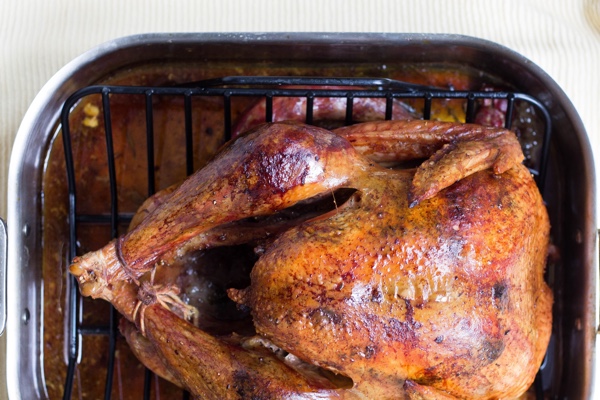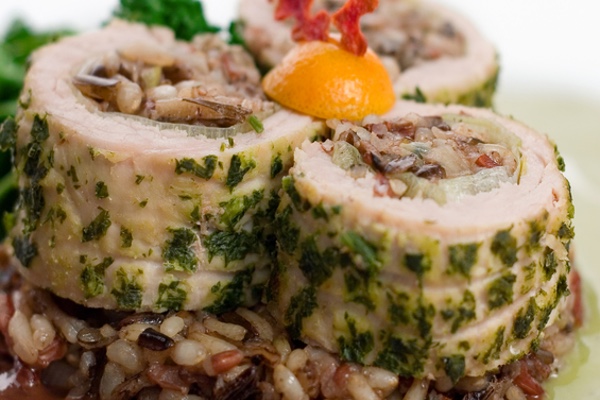

Our main courses range from simple one-pot meals to elegant presentations for those special evenings. No matter what the occasion, however, one truth remains the same: It's all about the flavors.


To browse these recipes in a list format, along with all of our recipes by category, see our Full Recipe Listing.


Basil Pasta Rags with Four Cheese Filling & Basil Sauce “Mignonette”

Posted on 16 August 2010 by The Gilded Fork

This is the rustic approach to ravioli or lasagna, and one that saves time while delivering the same magnificent taste.  Despite the lack of precision in its creation, it always appears lovely and inviting at service.  The Basil Sauce “Mignonette” with a garnish of fresh diced garden tomatoes makes this a gorgeous plate to serve as an appetizer, pasta or main course.

Makes about 1 1/4 cups filling

Ingredients

Basil Pasta Dough, rolled and cut through the width to make small sheets of dough
½ cup Parmesan cheese, grated
¼ cup Buffalo Mozzarella cheese, coarsely grated
¼ cup Danish Fontina cheese, shredded
¼ cup whole milk Ricotta cheese
3 cloves garlic, minced
Sea Salt
2 tablespoons fresh herbs, chopped (choose basil, chives, parsley, oregano, marjoram, thyme, or any combination)
Olive oil
Basil Sauce “Mignonette” (recipe below)

Preparation

Prepare a large pot of salted water and bring to a boil over high heat.  Lightly oil a large cookie sheet.  Preheat the oven to 375 degrees F.

In a medium mixing bowl, combine the four cheeses and garlic.  Add the fresh herbs and gently stir to incorporate throughout.

Place the pasta dough rags into the boiling water and cook for about 3 to 5 minutes, or until the pasta is almost cooked through.  Drain.  Separate the “rags.”

Place half the rags on the prepared cookie sheet about a 1/2-inch apart.  Place a small mound of the prepared cheese mixture in the middle of each rag (about 1/4 of the size of the pasta rag).  Take the remaining rags and place one on top of each cheese mound, lightly pressing the rag down and around the mound.  Lightly coat or spray the top of each rag with olive oil and place in the oven.  Bake for about 12 to 15 minutes, or until the cheese begins to melt.

Service

Plate 3 filled pasta rags on a warmed dinner plate.  If the cheese is not oozing from in between the pasta sheets, slice through the pasta where the cheese mound is located to allow it to bubble through.  Lightly drizzle the Basil Sauce “Mignonette” over the pasta rags and garnish with fresh diced tomato.  Serve immediately.

Basil Sauce “Mignonette”
Often thought of as strictly an oyster “sauce,” Sauce Mignonette is a French mixture of freshly-ground pepper, shallots, and wine vinegar.  We used an aged balsamic for the Pasta Rags with Four Cheese Filling here, as the irrepressible combination of cheese, basil, and tomatoes is eloquently elevated to a gastronomic experience with the addition of aged balsamic in this sauce.

Makes a generous 1/2 cup

Ingredients

White, Green and Pink peppercorns, combined and coarsely ground to yield a scant 2 tablespoons
2 medium shallots, sliced paper-thin
1/2 cup aged balsamic vinegar (substitute high-quality white wine, white balsamic, or aged sherry vinegar)
¼ cup gently-packed basil leaves, chopped into a chiffonade

Preparation

Combine all the ingredients in a small glass bowl.  Cover and refrigerate until ready to serve.  Can be prepared a full day in advance.  The flavors and aromatic quality of the sauce will develop over time, so allow at least a few hours for your sauce to cure.

Recipe and photo by Donna Marie Desfor

Tags: , , ,

Comments (0)

Citrus Tea-Rubbed Halibut

Posted on 02 April 2010 by The Gilded Fork

This recipe comes to us courtesy of our friend Chef Ming Tsai. Delicate Citrus Herbal Tea Rub and mild sautéed halibut were made for each other. Here, the fish is served with a refreshing salad of raw fennel, orzo, and orange segments. Of his tea rub, Ming writes: “I can never get enough of tea rubs, so I keep inventing new ones. This green tea and citrus example is particularly fresh and appealing: The tea is beautifully complemented by lemon, lime, and orange zest while mint and ginger add more invigorating flavor. This tea rub does wonders for lighter protein, like chicken and fish.

4 servings

Ingredients

½ cup Citrus Herbal Tea Rub (recipe below)
Four 6-ounce halibut fillets, skin off
2 cups blanched orzo pasta
3 oranges (2 segmented, 1 juiced)
Juice of 1 lemon
2 medium fenne bulb, top cut off, split in half, cored and sliced 1/8 inch thick
1 tablespoon extra virgin olive oil, plus more for garnish
Grapeseed or Canola oil to cook
Kosher salt and freshly ground black pepper to taste

For the Citrus Herbal Tea Rub (makes 4 cups):
1 cup green tea leaves
½ cup dried peppermint, spearmint or mint
1 cup lemongrass powder or flakes
2 tablespoons sea salt or kosher salt
2 tablespoons turbinado sugar or raw sugar
½ cup dried orange zest, crushed
½ cup dried lime zest
¼ cup dried lemon zest
¼ cup ground ginger

[Chef’s Note: To make dried zest, zest the fruit, spread the zests on a baking sheet and bake at 200° F until dried. (It takes about 2 hours.) The rub keeps for up to 3 weeks refrigerated in a tightly sealed container.]

Preparation

Prepare the Citrus Herbal Tea Rub:
In a small bowl, combine all of the ingredients. Set aside ½ cup for the recipe and store the remainder in a sealed container.

Prepare the halibut and orzo:
Place the tea rub on a plate and press both sides of the halibut in the rub. Heat a large saute pan over medium heat. Add oil and swirl to coat the pan. Add halibut and saute, turning once, until the halibut is cooked through, 4-5 minutes per side. Meanwhile, in a medium bowl, combine the orzo, orange segments and juice, lemon juice, fennel and olive oil and toss to coat. Season with kosher salt and freshly ground black pepper. Divide the salad among 4 serving plates, top with the halibut, drizzle olive oil over, and serve.

Copyright © 2003 Ming Tsai. All rights reserved. Reprinted with permission. www.ming.com

Recipe and photo from the Simply Ming cookbook

Tags: , , ,

Comments (0)

Gorgonzola-Stuffed Steak with Prosciutto

Posted on 25 March 2010 by The Gilded Fork

Rich and flavorful gorgonzola cheese blended with finely minced herbs and nuts oozes out of pockets cut into thick, meaty sirloin steaks. The outer wrapping of prosciutto or pancetta adds a decadent layer of additional flavor. Although we prefer this pocket technique, you can easily place this filling on top of your steak just after cooking as a decadent topping.

2 servings

Ingredients

2 NY Strip or Sirloin Steaks, 1½ to 2-inches thick

For the gorgonzola stuffing:
6 large fresh sage leaves
6 large fresh basil leaves
2 sprigs oregano, leaves removed
2 cloves garlic
2 tablespoons olive oil
2 tablespoons pine nuts
Freshly ground black pepper
½ cup gorgonzola cheese, crumbled
4 slices prosciutto or pancetta

Equipment

Heavy oven-safe cast-iron skillet.
Food processor

Preparation

Preheat oven to 425°F.

Place the sage, basil and oregano leaves, the garlic cloves and olive oil into a food processor, and pulse several times until finely minced. Add the pine nuts and pulse again until smooth. Add the black pepper and gorgonzola cheese, and process again for a few seconds until it reaches a smooth consistency. Set aside.

Trim the steaks of excess fat. Cut a slit through the middle of each steak, horizontally, about three-quarters of the way to the other side. Be careful not to cut all the way through the steaks. You want to create a pocket leaving the two sides and back of the steak intact.

Open the pocket of the steak and stuff with the gorgonzola filling. Do not overfill, as the gorgonzola will melt and ooze out of the steak. Wrap each steak with 2 pieces of prosciutto or pancetta, covering the opening to seal the gorgonzola in.

Heat the cast-iron skillet over medium-high heat until very hot. Brush the wrapped steaks with oil and place in the pan, searing each side for about 3 minutes. Carefully remove the skillet from the stove and place in the preheated oven to finish cooking the steaks to your desired doneness. Timing with vary depending upon the thickness of the steaks.

Remove the steaks from the oven, place on serving platter and cover with foil. Let the steaks rest for 5 minutes before serving.

Variations

The gorgonzola filling can be used as a topping for a variety of steaks, chops or even as a topping for baked potatoes. If using on steaks or chops, place a dollop of the filling on top of the meat just after cooking. The gorgonzola will melt delightfully over your steak as it rests before serving.

Recipe and photo by Lia Soscia

Tags: , ,

Comments (0)

Olive Oil Poached Sablefish with Citrus & Thyme

Posted on 21 March 2010 by The Gilded Fork

The sweet taste and flaky texture of sablefish are complemented by its poaching liquid: wonderfully fruity olive oil. Poached at an unusually low temperature, the flavors of this fish and its accompaniments meld together, creating a depth that is unattainable otherwise. This ensures slow, even cooking, as well as retained moisture and deeply imparted flavors. Poaching fish in olive oil adds yet another dimension: The lemon practically melts, while the crunch of the Spanish almonds is enhanced. Unpretentious and patient, this dish is a nod to the typically Spanish (and Gilded Fork) way of cooking.

4 servings

Ingredients

2½ pounds sablefish fillets, 1-inch thick (You may substitute any firm white fish. Use what’s freshest)
2 large lemons, thinly sliced crosswise
¼ cup fresh lemon thyme
½ cup Marcona almonds, roughly chopped
2 cups extra virgin olive oil
Sea salt to taste (about 3 teaspoons)
Freshly ground black pepper (about ½ teaspoon)

[Chef’s Note: Sablefish is also known as black cod. If you do not have Spanish Marcona almonds, feel free to use slivered almonds or to chop peeled almonds. In addition, we would suggest using a green, fruity olive oil for poaching, preferably a Spanish one with lemon undertones.]

Preparation

Preheat the oven to 250° F. Sprinkle the fish with the salt and pepper, allowing it to sit for a few minutes at room temperature. In one layer, place half of the lemon slices in an 8-inch glass baking dish. Sprinkle half of the thyme over the lemon. Arrange the fish in one layer on top of the lemon and thyme, and top with the remaining thyme, lemon and the chopped almonds. Pour the olive oil into the dish, carefully preventing the toppings from falling off the fish. Bake until the fish is cooked through and flaky, about 1 to 1¼ hours.

Service

When plating, lift the fillets out of the olive oil, leaving behind the bottom level of lemons but plating the fish with the top layer of lemons and the almonds. Spoon a few tablespoons of the poaching olive oil over the fish. We suggest serving this dish with simple rice pilaf or an herbed couscous.

Recipe by Sandra Di Capua
Photo by Mark Tafoya

Tags: , , ,

Comments (1)

Moroccan Pork Tenderloin with Cardamom Glazed Carrots

Posted on 31 January 2010 by The Gilded Fork

This tenderloin is succulent and full of flavor. The aromatic qualities of the spice rub are an invitation to the senses to indulge.

Pork Tenderloin

Serves 6-8

Ingredients

2 1 ½ pound pork tenderloins, trimmed of all visible fat and silver skin removed
¼ cup Moroccan Spice Rub (recipe follows)
2 tablespoons olive oil
2 tablespoons butter

Preparation

Spread half of the spice rub on one tenderloin and, using your hands, massage it all over the tenderloin. When fully and evenly covered, wrap the tenderloin in cling film. Repeat with the second tenderloin. Allow the pork tenderloins to marinate in the refrigerator for 2 hours.

Bring the marinated tenderloins to room temperature on a counter. Preheat oven to 375° F.

Set a large, oven proof skillet over medium-high heat. Add olive oil and butter. Heat pan until the butter is melted, stirring to combine with the olive oil. Unwrap the tenderloins and pan sear the tenderloins together in the skillet until brown, about 4 to 6 minutes per side.

Place the skillet into the preheated oven and continue cooking the tenderloins for about 8 minutes until medium-rare, or until the internal temperature reaches 135° degrees. Remove from the oven and move to a cutting board. Tent with aluminum foil and allow to rest for 15 minutes. The internal temperature of the pork will continue to rise.

Prepare a pan sauce:
½ cup coarsely chopped apple-smoked bacon (about 6 to 8 slices) cooked until crisp, and drained on paper towels
3 cups chicken broth (low sodium)
1 cups dry white wine (Chardonnay works well)
¼ cup apricot/peach/passion fruit jelly
3 tablespoons unsalted butter
1 teaspoon fresh rosemary, minced

Return the skillet to the stove top and place over medium-high heat. Add the bacon, chicken broth, wine and jelly to the pan. Boil about 20 minutes until reduced to 1 ½ cups, scraping any browned bits from the pan. Strain the sauce into a small sauce pan and place over low heat. Add the butter 1 tablespoon at a time whisking until incorporated and sauce is smooth. Add the rosemary. Season with salt and pepper.

[Chef's Note: Sauce can be prepared in advance without incorporating the browned bits from the seared tenderloins. Cover and refrigerate. Reheat over medium heat until warmed through.]

Moroccan Spice Rub

This rub is as aromatic as it is flavorful. Pork is a wonderful platform to express the combination of spice and citrus, combined with a side of Cardamom Glazed Carrots (recipes below).

Makes approximately ¼ cup spice rub

Ingredients

2 garlic cloves, peeled and coarsely chopped
½ tablespoon fennel seeds
1 teaspoon cumin
1 teaspoon ground coriander
1 ½ teaspoons ground cardamom
1 teaspoon dry mustard
½ teaspoon ground cinnamon
¼ teaspoon ground cloves
1 tablespoon brown sugar
1 tablespoon orange zest
Olive oil

Preparation

Combine all of the ingredients, except olive oil, in the bowl of a small food processor. Process in short bursts until the ingredients are coarsely ground and combined. If the rub is dry, add olive oil in a slow drizzle just until the mixture has some moisture. You do not want to turn the ingredients into a paste. Rather, the rub should be aromatic and just moist.

Cardamom Glazed Carrots

Serves 4

Ingredients

1 tablespoon butter
1 tablespoon olive oil
1 pound spring baby carrots, washed and unpeeled
¼ teaspoon ground cardamom
½ teaspoon sea salt
Freshly ground white pepper, to taste
¼ cup freshly squeezed orange juice
Zest of ½ orange
½ of a fresh lemon
Chopped chervil, for garnish

Preparation

Heat olive oil in a large pan or skillet over medium-low heat. Add butter and melt, stirring to incorporate. Add carrots and cardamom. Toss with salt and pepper. Increase heat to medium, and add the orange juice. Cover the pan and cook over medium heat until carrots are just tender, about 5 minutes.

Remove the lid and bring to a boil, cooking off the excess liquid. Remove the pan from the heat, add orange zest and toss. Place in a warmed bowl, sprinkle with chervil leaves and taste. Add a drizzle of fresh lemon juice just to brighten the flavors. Serve immediately.

[Chef's Notes: In doubling this recipe to serve eight, do not double all of the spices. Instead, double the carrots, butter, and olive oil, then use the specified amount of the rest of the ingredients, and adjust them to taste.

This recipe also works well with packaged or mature carrots.  First peel them, then proceed as directed.]

Recipe by Donna Marie Desfor

Photo: Kelly Cline

Tags: , , ,

Comments (0)

Beer-Braised Beef Back Ribs

Posted on 24 January 2010 by Jennifer Iannolo

I see the mastering of lesser cuts of meat as the mark of a true cook. Let’s face it: Anyone can serve a decent filet mignon — there isn’t a whole lot of cooking involved. Given both the skyrocketing prices of food and the deep-seated need for me to master those lesser cuts, I have set out to master the art of braising. All-Clad was kind enough to send me a 6-quart saute pan to test from their new Stainless with d5 collection, so it is my new plaything (initial thoughts at the end of the post). I do love a pan that can go directly from stove top to oven, as it makes the cooking and cleaning easier.

There is something inherently comforting about slow-cooked, caramelized beef, but it takes a bit of patience — not my strong suit. Nevertheless, I reminded myself ahead of time that such patience would result in a luscious dinner.

The last time I made beef-back ribs I used an ale and finished them on the stove top, and used a small soup pot. This time I decided to go with a lager and finish them in the oven in the All-Clad pan. In this case I used Foster’s, as it was the only beer I could find in a single serving, and one can does the whole batch.

The beauty of these ribs is that they are mighty cheap. I bought two packs (about 12 ribs) for a total of $3.00. These are not to be confused with short ribs, which have the meat on top of the bones. These have the meat in between the bones, and are much cheaper. Now, I might be braising these slightly differently from the way others do, but I look at recipes as a guide. Feel free to adapt, add different flavors, or whatever you like.

Step 1: Caramelize the ribs.
This is the most critical part of the whole process, so don’t rush it. You want to really get some caramelization on these ribs before they are submerged in liquid, because it’s a major part of your flavor component. It will take about 20 minutes. Lightly coat the ribs with Kosher salt and a bit of pepper, get your pan really hot, add some olive oil, heat until it shimmers, and place your short ribs in the pan. Leave them alone.

While that’s happening, pre-heat your oven to 375 F. Resist the urge to move the meat around too much — let the magic happen.

Step 2: Add onions & garlic.
You can also add carrots here, but I forgot to grab one at the supermarket. It happens. Reduce your heat and add the onions and garlic. You may want to wait until the last few minutes to add the garlic because if it burns it will ruin the whole dish. I probably should have been a bit more patient here with the onions, but I added the garlic simultaneously and didn’t want to burn it. (This photo is before the onions had done their delicious sweating.)

Note: Some recipes call for removing the ribs, draining the fat from the pan, and starting with fresh oil to sweat the onions, garlic and other vegetables. I disagree, because in this case there wasn’t too much fat left, and I wanted the flavor.

Step 3: Add braising liquid, herbs & spices.
I added a giant can of Foster’s, some of the rosemary water I made the other day (not just for hair!), some ground coriander and a hint of Chinese five spice. (Add whatever spices tickle your fancy. For whatever reason, my mental mouth liked these.) Stir the liquid and scrape the bottom of the pan to loosen all the yummy bits. These are also important for flavor.

Step 4: Cover and place in a 375 F oven.
Now go away. For about 3 hours. You can check on the liquid periodically (I do so about every 30 minutes), but let the meat do its thing.

When the ribs are finished, the liquid will have reduced considerably, and the meat will be falling off the bone. You shouldn’t need a knife to cut it apart. Note: This is when you should check the salt flavor in the dish. I tend to go easy on the salt in the beginning, because as the juice reduces the flavors become intensified, and too much salt will ruin it.

Step 5: Serve over something starchy and delicious.
Some people serve these with potatoes or rice, but I am a huge fan of egg noodles. I like the way they slide over my tongue and slither down my throat. Once I remove the bones and there is nothing but meaty goodness, I like to slather this over a pile of noodles and lose myself in silky, meaty goodness.

Verdict on the All-Clad Stainless with d5 saute pan:

My sentiments about cookware and sports cars are the same: I want sleek design and superior performance. This pan did not disappoint. All-Clad has incorporated some really smart design elements into this collection, including little touches that make for easier logistics, such as lid handles that can accommodate hands wearing oven mitts, cool handles on the pan should you forget said oven mitt (I have done so) and a pouring rim all the way around the edge. The pan is also quite light despite its enormous 6-qt. size.

Most important for me, however, is the even cooking across the surface of the pan. I had ribs inside and outside, and expected to have to move them around so the inner ones wouldn’t burn, but caramelization transpired in harmony for all the ribs. Glee.

Cleanup with this pan was also effortless, even with caramelized gooey goodness all over the pan and lid. I will be experimenting much more with this pan, so I’ll share further thoughts as they occur.

Tags: , ,

Comments (0)

White Pizza with Shrimp, Crab & Asparagus

Posted on 10 January 2010 by Jennifer Iannolo

When my friend Paul started talking about this pizza he prepared, I believe I may have dribbled on my shirt. I’m unsure because I was caught up in the rapture of my mental mouth at that moment. This combination of flavors is veritably sex on a plate.

This recipe has a lot of steps, but it is the perfect way to spend a snowy or chilly afternoon.

Serves 4

Ingredients

Recipes below for all of the following:
Pizza dough
Garlic olive oil
Roasted cherry tomatoes
Sauteed vegetables
Sauteed shrimp

1/2 lb lumb crab meat , picked through and drained if packed in water
2 c mozzarella cheese
1/2 cup parmesan cheese, finely grated

Special equipment

15” round pizza stone

Preparation

For the pizza dough:
1 cup lukewarm water
2 1/4 teaspoons active yeast
1 teaspoon sugar
2 1/2 cups white unbleached flour (don’t use whole wheat for this pizza)
3/4 teaspoon salt
2 tablespoons garlic olive oil

Proof yeast in water and sugar. Add remaining ingredients, stir with a fork and incorporate into a ball. Knead a couple times on floured surface (don’t over mix, as this is not a bread dough). Place in greased bowl, covered in warm place to rise until doubled, about 30-45 minutes.

For the garlic olive oil:
2 – 3 cups olive oil
1 head garlic peeled and sliced
Place garlic into oil and simmer under med heat until the garlic starts to brown, about 20-30 minutes. Note: The garlic will boil and begin to settle before it starts to brown if at medium heat. Set aside and let cool. If the garlic continues to brown, remove it with a slotted spoon and set aside. Otherwise remove the garlic when oil is cool, and store oil in an air-tight container.

For the roasted tomatoes:
12 oz cherry tomatoes
1 tablespoon white balsamic vinegar
1/2 teaspoon kosher salt
1/4 teaspoon pepper
1 tablespoon garlic olive oil

Pre-heat the oven to 450 F.

Halve tomatoes and squeeze/scoop out seeds and pulp. Place on baking sheet, drizzle with garlic olive oil, vinegar, salt and pepper. Roast 20-30 minutes until beginning to caramelize. Remove and cool on baking sheet.

For the sauteed vegetables:
8 oz mushrooms, sliced
8 oz asparagus, cut into 1/2-inch lengths
1 tablespoon garlic olive oil
2 tablespoon sherry
1/2 teaspoon thyme, dried

Heat the olive oil in a large saute pan until shimmering. Saute mushrooms until water is released and evaporated. Add sherry, thyme, salt and pepper, and cook until most of the liquid is absorbed. Add asparagus and cook for 2 minutes (keep asparagus under-cooked). Remove from heat and set aside. Add roasted tomatoes and stir. Drain on paper towels if there is any excess liquid.

For the shrimp:
1/2 lb shrimp, cleaned and deveined (cut up if large)
1/2 teaspoon salt
Pinch of pepper
1 tablespoon garlic olive oil
1 teaspoon Sriracha hot sauce (the one with the rooster — do NOT substitute)

Heat olive oil in a large saute pan over medium-high heat. Add ingredients and saute shrimp until almost cooked (it will finish cooking in the oven). Drain on paper towels.

For the white sauce:
2 tablespoons garlic olive oil
1/4 cup unbleached flour
1 cup milk (2% or higher)
1/2 teaspoon salt
1/4 teaspoon pepper

Heat olive oil in a small sauce pan over medium-high heat for 2 minutes. Add flour and whisk 1-2 minutes until the flour has mixed in and cooked to remove the raw taste. Add milk, increase heat slightly and whisk until thickened. Add salt and pepper, cover and set aside. Note: You may need to re-heat the sauce a bit before adding to the pizza.

Assemble the pizza:

Spread pizza dough onto the cold pizza stone, drizzle with garlic olive oil and bake for 8 minutes. Remove the dough from the oven, spread white sauce over the dough and top with veggie mixture. Sprinkle the crab and shrimp over the top. Cover with mozzarella and parmesan cheeses. Bake 15-20 minutes more until cheeses begin to brown.

Devour.

Recipe and photo by Paul Adair. All rights reserved.

Tags: , , ,

Comments (1)

Gramma Crucitti’s Meatballs

Posted on 24 December 2009 by Jennifer Iannolo

Meatballs are so much more than food to me. They embody a big piece of my childhood, and dear loved ones whose memory I’m able to keep alive each time I make them. The moment preparation begins, I’m instantly transported to happy memories, and one ritual in particular.

My late brother Bob was an incredible cook, particularly when it came to Italian food. He spent so much time at the stove, his proclivities earned him the nickname “Meatball.” I spent many a Saturday or Sunday watching him at the stove, carefully rolling out each meatball, then rolling each again before it went into the oil. The smell would fill the house, beckoning me like a wanton lover.

When meatballs were on the menu I was never far away; this was a necessity, as I had to strike at the perfect moment. You might say I have a “thing” for meatballs, but with seven kids in the family, rations were pretty strict. I also like my meatballs without sauce, so if I wanted to sneak one, I had to do it between the time they came out of the frying pan and went into the pot of sauce. The moment my brother turned his back I would spring, grabbing a scorching hot meatball and running for the bathroom, where I would lock myself in and blow on the meatball to cool it and savor each second of its ambrosia-like qualities. Sometimes I was too hasty, and spent the next couple of days with a burnt tongue.

The batch I made today brought me to what I’m calling Meatball Nirvana. The texture and flavor were PERFECTION. Since many people have requested the recipe over the years, I thought it was time to share.

This recipe comes from my Gramma Crucciti (dad’s mother), and there are two important secrets: (1) you must use stale bread; and (2) you must not be squeamish. The only way to ensure the meatballs taste good is to sample the raw mix before it goes into the frying pan. You only need a little pinch to taste. The rest is easy, but a lot of the measuring needs to be done on-the-fly, as your taste preferences may differ from mine. Play with the recipe until you get the flavors where you want them.

Actually, there is a third secret: These must be made with love, and so much of it, it fills the kitchen. It improves the taste ten-fold.

Ingredients

2 lbs chopped meat (no more than 80% lean — embrace the fat, it tastes good)
Equal amount of stale Italian bread (approximately 1 1/2 large loaves for 2 lbs meat)
1 egg
1-2 cups Pecorino Romano cheese, finely grated, to taste
2 cloves garlic, finely chopped or pressed
1 Tbsp parsley, finely chopped
Salt, to taste

Vegetable oil for cooking

Preparation

Prepare the bread:
Soak the stale bread in a large bowl of water until the bread is completely soft. Break the bread apart in large chunks, removing the crust. Squeeze each chunk with your hands to get as much of the water out as possible and set aside on a plate.

[Chef's Notes: It is important that you have a 1:1 ratio of bread to chopped meat to achieve the proper texture. Please do not substitute bread crumbs for the squeezed bread, as you will get nowhere near the same results.]

Prepare the meatball mix:
Add the bread to the chopped meat and mix together by hand, squeezing to ensure an even distribution of bread throughout. Add 1 cup of the Pecorino Romano, then the remaining ingredients and mix my hand. Taste a pinch of the mixture to see if the flavors are to your taste. Add more cheese if necessary.

Roll the meatballs:
Using a spoon or your fingers, take a scoop of the mixture and roll it between your palms to form the meatball. (The size is entirely up to you, but a soup spoon usually makes a good guide.) Place the raw meatballs on a large platter in a single layer.

Fry the meatballs:
Half-fill a large saute or cast-iron pan with vegetable oil. Heat under high heat until the oil shimmers. Carefully add the meatballs, re-rolling them if they have fallen out of shape. Fry until a solid brown crust has formed on the bottom half of the meatballs, about 4 minutes, then flip over with a metal slotted spoon. Cook for another 4 minutes. (You can remove one and cut it in half at this point to make sure it’s fully cooked.) Remove to a plate or bowl lined with paper towels to drain the grease.

[Chef's Notes: You can also use a deep-fryer to make these, but you must be careful to load the basket in a single layer at a time or the meatballs will stick together.

You might be inclined to use olive oil for cooking the meatballs, but I don't recommend it. It imparts an additional layer of flavor that is not necessarily ideal, and doesn't play well at high temperatures.]

If you’ve made a pot of sauce (I’ll save that for another recipe), add the meatballs to the sauce and mangia!

Tags: , , , ,

Comments (4)

Turkey and Wild Mushroom Sauce

Posted on 30 November 2009 by The Gilded Fork

This sauce is a great way to use the small leftover bits from the bottom of the turkey platter. Chop up any additional breast meat or the dark meat that clings to the bone around the drumsticks, as well as any bits of skin. The wild mushroom and tomato sauce thickens nicely, and is ideal over whole wheat pasta or brown and wild rice. This sauce freezes well, so you can make it right after Thanksgiving to use your leftovers, then defrost it in the middle of winter when you’re hankering for a little quick comfort food.

8 servings

Ingredients

1 cup very hot water
½ ounce dried Porcini mushrooms
½ pound fresh wild mushrooms, sliced
½ pound button mushrooms, sliced
1 teaspoon olive oil
1 pound chopped leftover roasted turkey (or 1 pound ground fresh turkey)
2 medium onions, diced
6 cups chicken broth
2 medium carrots, diced
1 cup celery, diced
3 garlic cloves, minced
2 tablespoons tomato paste
1 tablespoon fresh rosemary, minced
2 tablespoons fresh oregano, minced
2 tablespoons cornstarch
¼ cup cold water

Equipment

Strainer lined with cheesecloth
Dutch oven

Preparation

Reconstitute the dried Porcini in the hot water and allow them to soak for 15 minutes. Drain through several layers of cheesecloth in a strainer, reserving the soaking liquid. Gently rub the remaining fresh mushrooms with a paper towel to remove any grit or dirt. Chop the fresh mushrooms roughly and set aside.

[Chef’s Note: While others may recommend washing mushrooms in water, we prefer not to let them absorb additional water, as this requires longer cooking. Using a paper towel will get all the dirt off the surface.]

Heat the olive oil in a heavy-bottomed Dutch oven over medium-high heat. If using fresh ground turkey, sauté the turkey together with the onions, stirring until the turkey is very browned and beginning to caramelize on the bottom of the pan. Add ½ cup of the chicken stock and continue cooking over high heat until the liquid has evaporated.

[Chef’s Note: If using leftover chopped turkey, omit this first step, and begin the recipe by sautéing the onions until softened, then continue with the next steps below.]

Add the fresh mushrooms, diced carrots, celery, and garlic. Cook over medium-high heat, stirring frequently, for 5 more minutes. Add the remaining 5 ½ cups of chicken broth, the tomato paste, half of the rosemary, half of the oregano, the reconstituted and chopped Porcini mushrooms and the reserved mushroom soaking liquid. [Chef’s Note: If using leftover chopped turkey, add it at this point.] Bring to a boil over high heat, stirring to dissolve the tomato paste. Lower the heat and simmer the sauce, uncovered, for 25 to 30 minutes or until reduced by half.

Mix the cornstarch with ¼ cup cold water. Add the cornstarch slurry to the sauce along with the remaining fresh herbs and simmer 2 minutes more or until thickened.

Service

Serve the sauce hot over whole wheat pasta or a wild and brown rice mixture.

Recipe by Mark Tafoya

Tags: , ,

Comments (0)

Turkey Gumbo

Posted on 18 November 2009 by The Gilded Fork

Gumbo is a traditional dish served in the South. There are many variations of the dish, but this one uses dark meat turkey instead of the traditional sausage and shrimp. To spice it up, we’ve added andouille sausage to accompany the standard okra, onion, celery and green pepper. This is an easy and delicious one-pot meal, and great way to take advantage of your leftover Thanksgiving turkey.

6 servings

Ingredients

2 tablespoons all-purpose flour
1 tablespoon vegetable oil
1 cup onion, chopped
1 cup celery, chopped
1 cup green bell pepper, chopped
4 cloves garlic, minced
¼ cup water
1 (14.5 ounce) can stewed tomatoes (with juices)
1 (10.5 ounce) can chicken stock
2 bay leaves
½ lb dried andouille sausage, sliced into ¼-inch pieces
2 cups cooked dark meat turkey, diced
1 (10-ounce) package frozen okra, thawed
1 tablespoon Cajun seasoning
3 cups hot cooked rice

Equipment

Large Dutch oven

Preparation

Prepare the browned flour:
Place the flour in the Dutch oven and cook over medium-high heat for about 7, minutes or until the flour is very brown. Stir constantly with a wire whisk to keep the flour from sticking to the bottom. When the flour is completely browned, remove from the Dutch oven and set aside.

[Chef’s Note: The browning of the flour takes patience but is an important step in achieving the gumbo’s classic rich flavor].

Prepare the gumbo:
Heat the oil in the Dutch oven over medium-high heat. Add the onion, celery, green bell pepper and garlic. Sauté for about 8 minutes or until the onion is translucent. Sprinkle the vegetables with the browned flour and cook for another minute, stirring constantly. Add the water, the tomatoes and their juice, the chicken stock and bay leaves. Bring the gumbo to a boil, then reduce the heat and simmer, uncovered, for 10 minutes. Add the andouille sausage and simmer, uncovered for 5 minutes. Add the cooked turkey, okra and Cajun spice seasoning and cook for another few minutes.

[Chef’s Note: Andouille sausage is a spicy, smoked Cajun pork sausage. There are two varieties: fresh and dried. This recipe calls for the dried version, which is typically found near the gourmet cheese and deli meat area of your grocery store. If you can only find the fresh sausage, you will need to precook it in a separate skillet before adding it to the gumbo.]

Service

Serve the turkey gumbo over fluffy white rice.

Variations

If dark turkey meat is not readily available, turkey breast meat or chicken are both adequate substitutes. Traditional gumbo also contains about ½ lb of medium-sized, peeled, deveined shrimp. If you choose to include the shrimp in your recipe, add them in at the very end with the turkey and okra. Cook them just until they turn pink.
Recipe and photo by Lia Soscia

Tags: , , ,

Comments (0)


Site hosting provided by fooMG